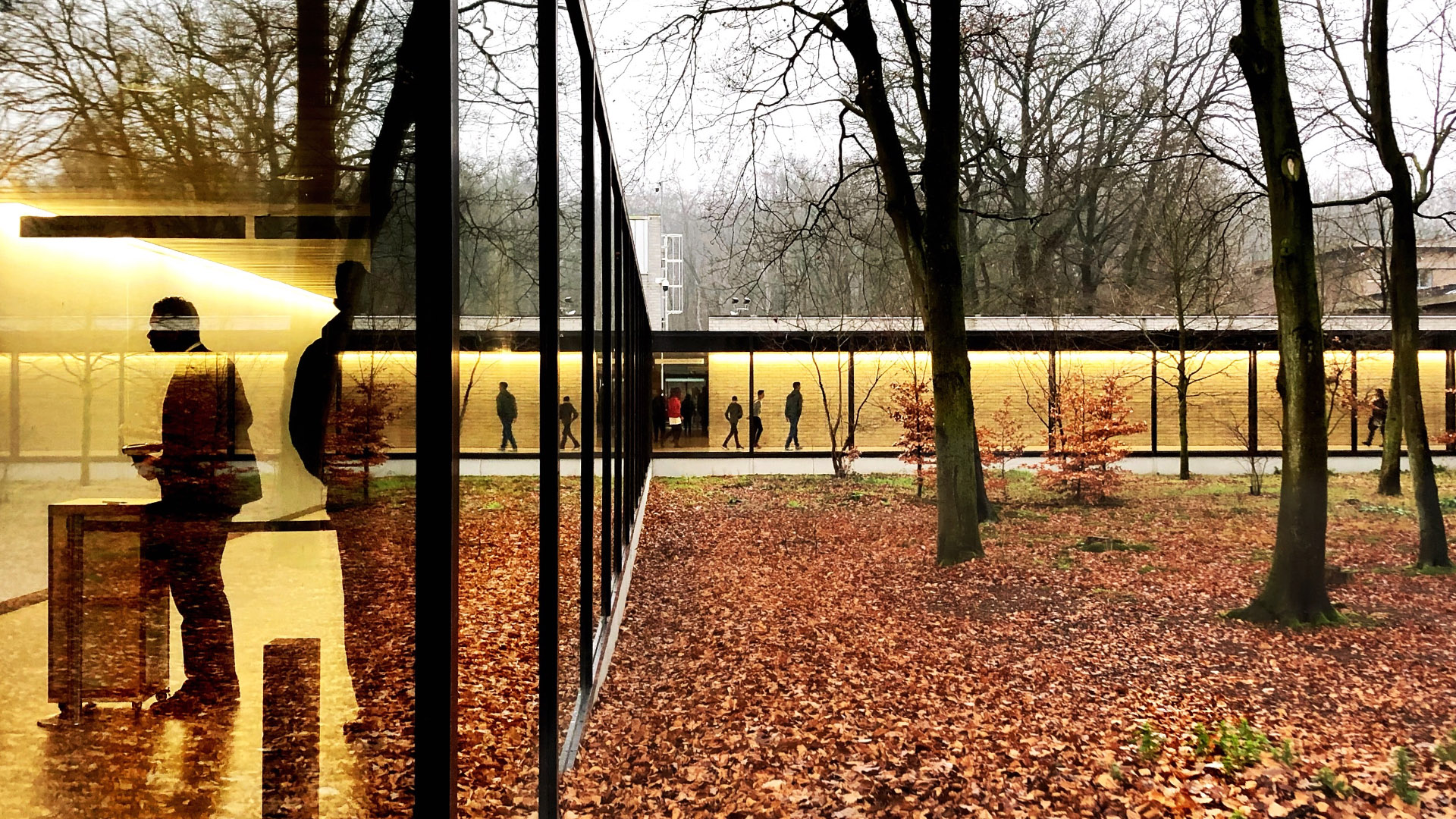
After Amsterdam and Rotterdam, the Netherlands becomes quieter but not smaller. The Hague, Utrecht, and Otterlo hold a different kind of travel memory: museum rooms, civic interiors, De Stijl houses, forest buses, sculpture gardens, and artworks that stay in your mind long after the route ends.
This post is a set of smaller Netherlands memory anchors. Instead of trying to cover every city completely, I would save the places and objects that made each stop easy to remember later.
For the strongest modern-city architecture stop in this series, go to the Rotterdam modern architecture travel guide, then come back to this quieter Netherlands route.
A short Netherlands travel memory reel
This article turns a short travel reel into a more searchable memory route: where the photos were taken, which objects could become keepsakes, and how I would save the story in MagnetStory.
The Hague: civic space and compact museum memories
The Hague feels more formal than Amsterdam or Rotterdam, but that formality creates very clear memory anchors: a city hall atrium, a small museum, and one painting that almost everyone recognizes.
Atrium City Hall The Hague
The Atrium in The Hague City Hall is a civic interior memory: white space, scale, light, and the feeling of standing inside a public building that behaves almost like an indoor square.
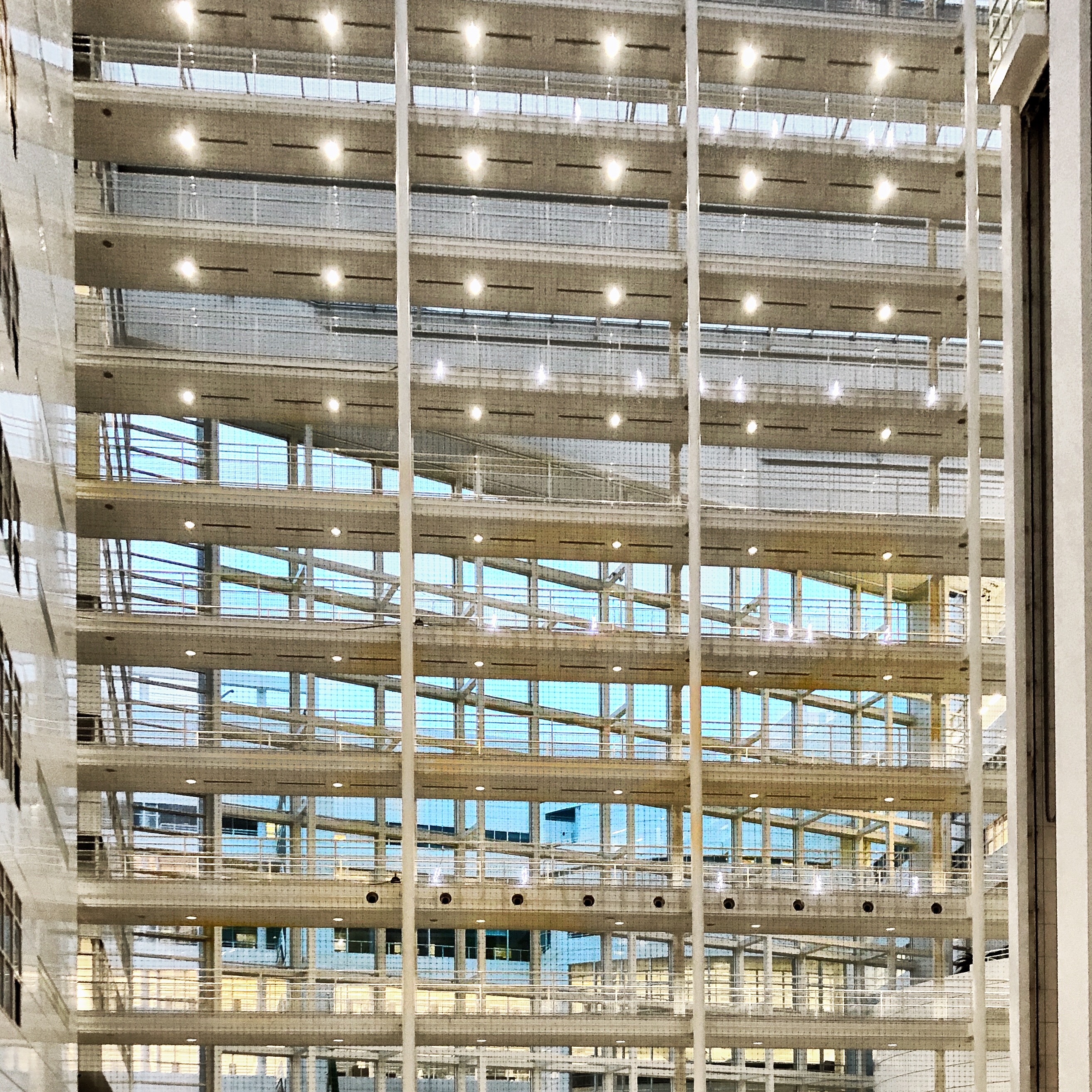
The City Hall atrium works as a memory of public space, not only as architecture.
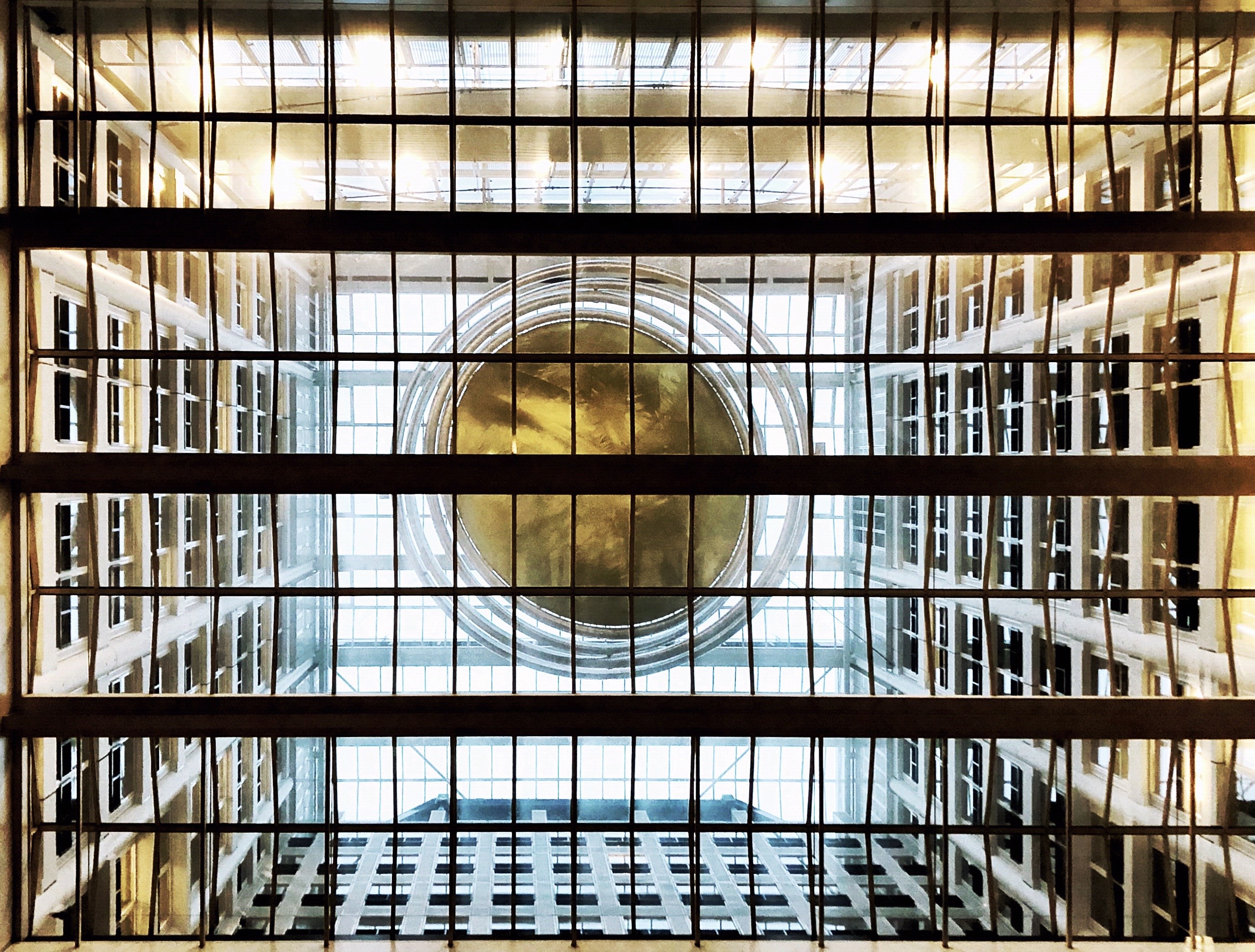
A second angle can hold the scale and light that a souvenir alone would not explain.
Mauritshuis
Mauritshuis is a compact museum memory. It is small enough to remember as a complete visit, and strong enough that a ticket, postcard, or museum-shop card can carry the whole stop.
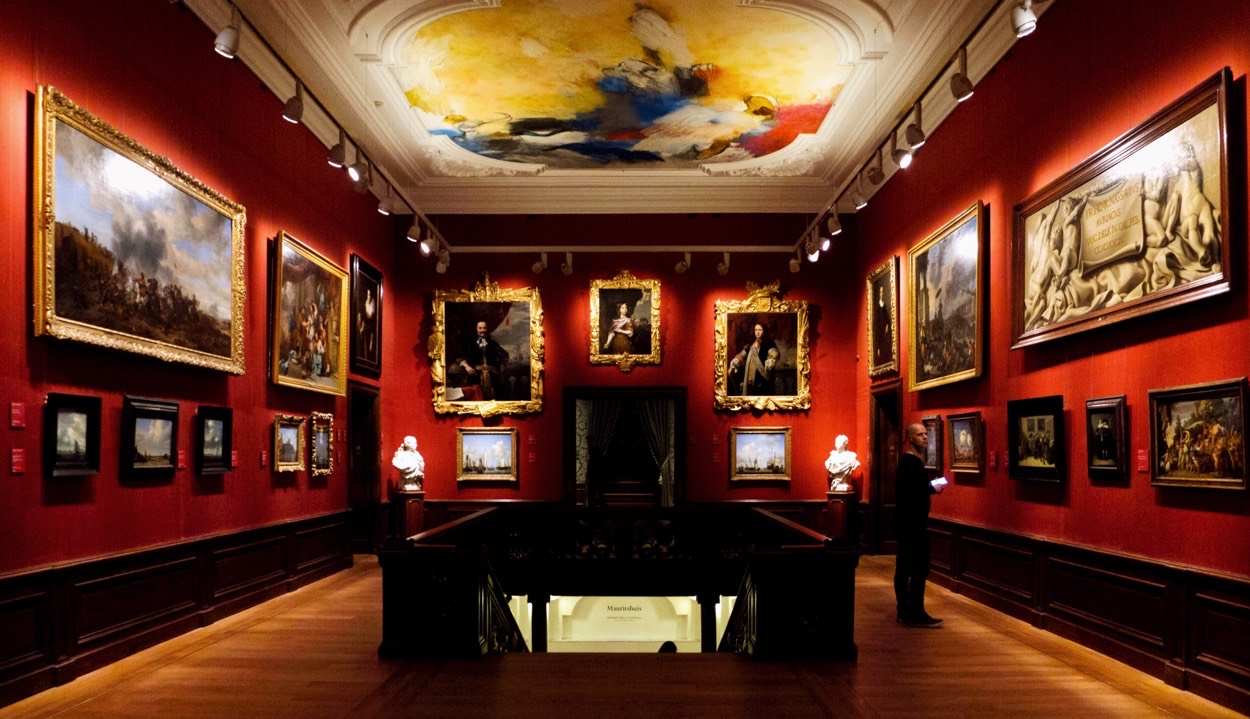
Mauritshuis is the kind of museum where one postcard can hold the entire visit.
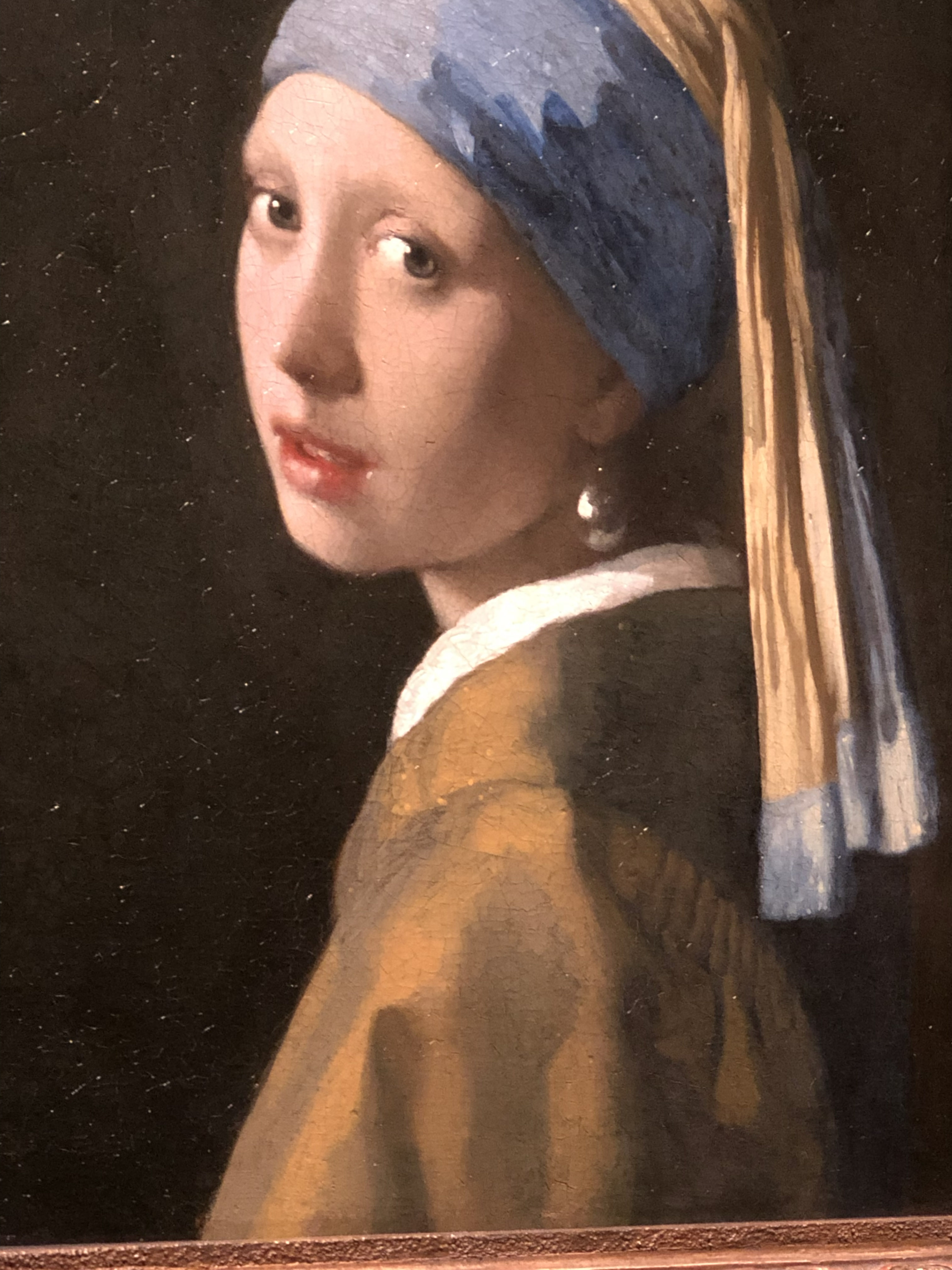
Girl with a Pearl Earring is a natural postcard anchor: one artwork, one object, one memory.
Utrecht: De Stijl, movable walls, and a broken boot
Utrecht, for this route, is about Rietveld and De Stijl. It is also a reminder that architecture memories are not only clean facts: sometimes they include high stairs, no-photo rules, and the very ordinary detail that I broke my boots there.
Rietveld Schröder House
The Rietveld Schröder House is one of the clearest architecture memories in Utrecht. Indoor photography is not part of the memory here, so the exterior becomes the object-facing image: planes, colors, edges, and the thought that the inside was designed to change through movable walls.
One detail I love is how personal the house still feels. Truus Schröder lived with this experimental space for decades, and the stories around the house make it feel less like a static monument and more like a radical way of living.

No interior photos needed: the outside already says a lot about the idea.
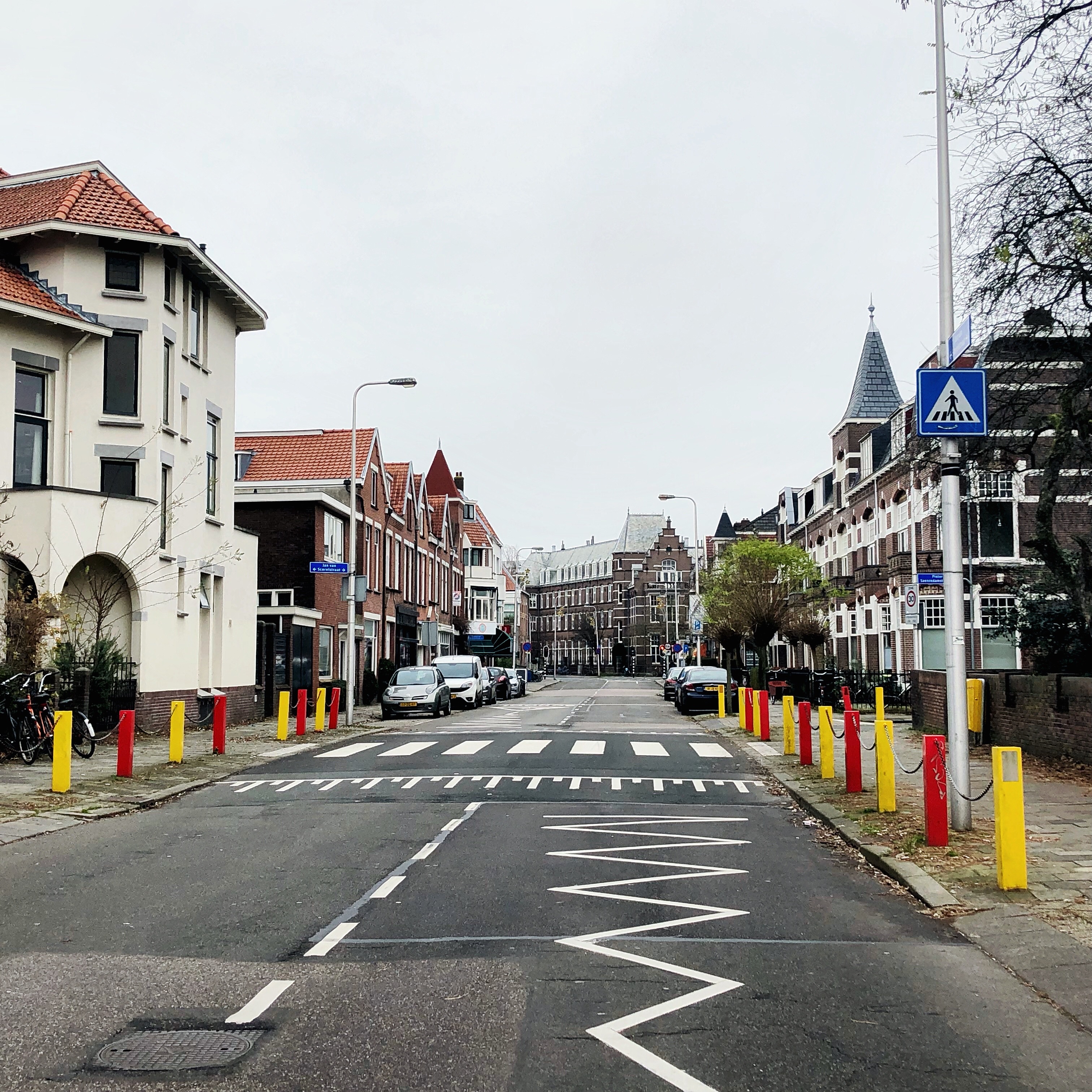
A city photo gives the house a route around it, not just a single destination.
Rietveld Apartments Erasmuslaan
The Rietveld Apartments near Erasmuslaan belong to the same wider idea of flexible living. I would keep this as a text-first stop for now: an architectural echo of movable panels, but also a reminder that experimental ideas meet real wear, damage, stairs, and daily use.
That is why the broken-boots detail belongs here. It is not an official travel warning. It is the kind of small, physical memory that makes a place specific.
Otterlo: Van Gogh, Scultpture, and the forest museum
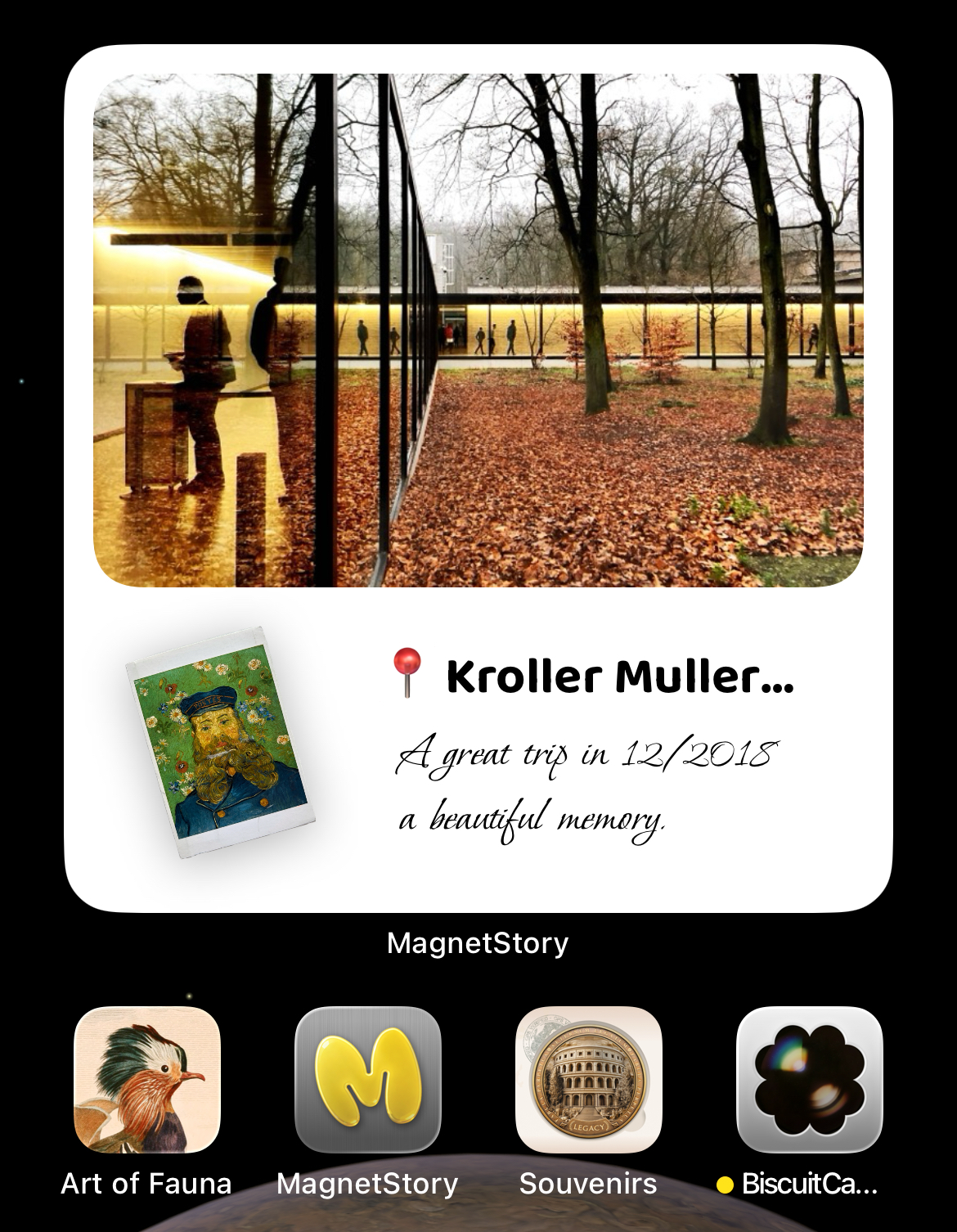
Otterlo feels different because Kröller-Müller Museum sits inside De Hoge Veluwe National Park. The trip is not only a museum visit; it is also the bus timing, forest setting, sculpture garden, and the feeling of being a little far from the city.
Kröller-Müller Museum
Kröller-Müller is worth planning carefully if you go by public transport. The museum is in the forest, buses do not run late, and the official route information asks visitors to check current departures. That practical detail became part of the memory for me: go early enough, and leave before the day disappears.
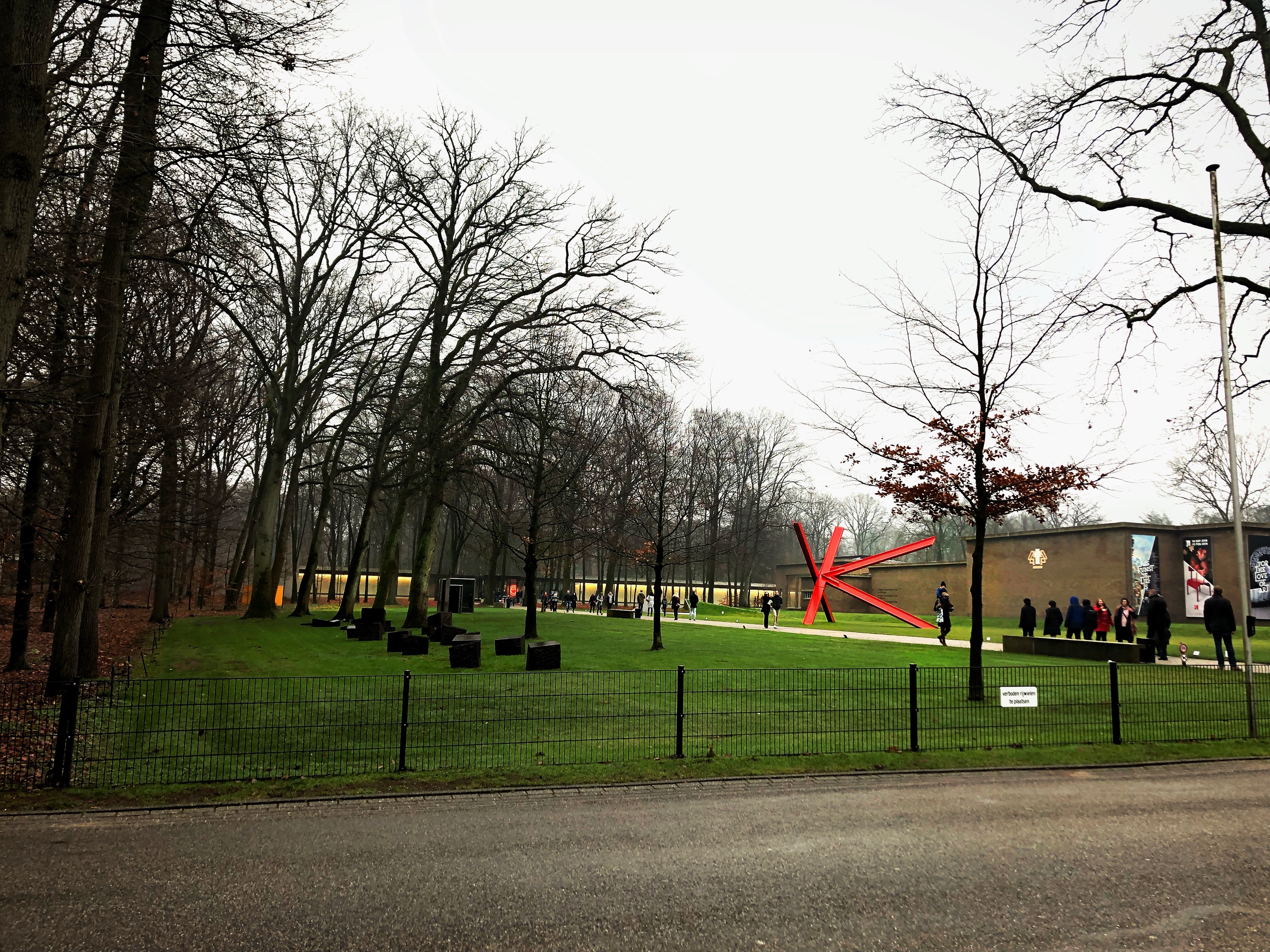
The museum memory includes the landscape around it.
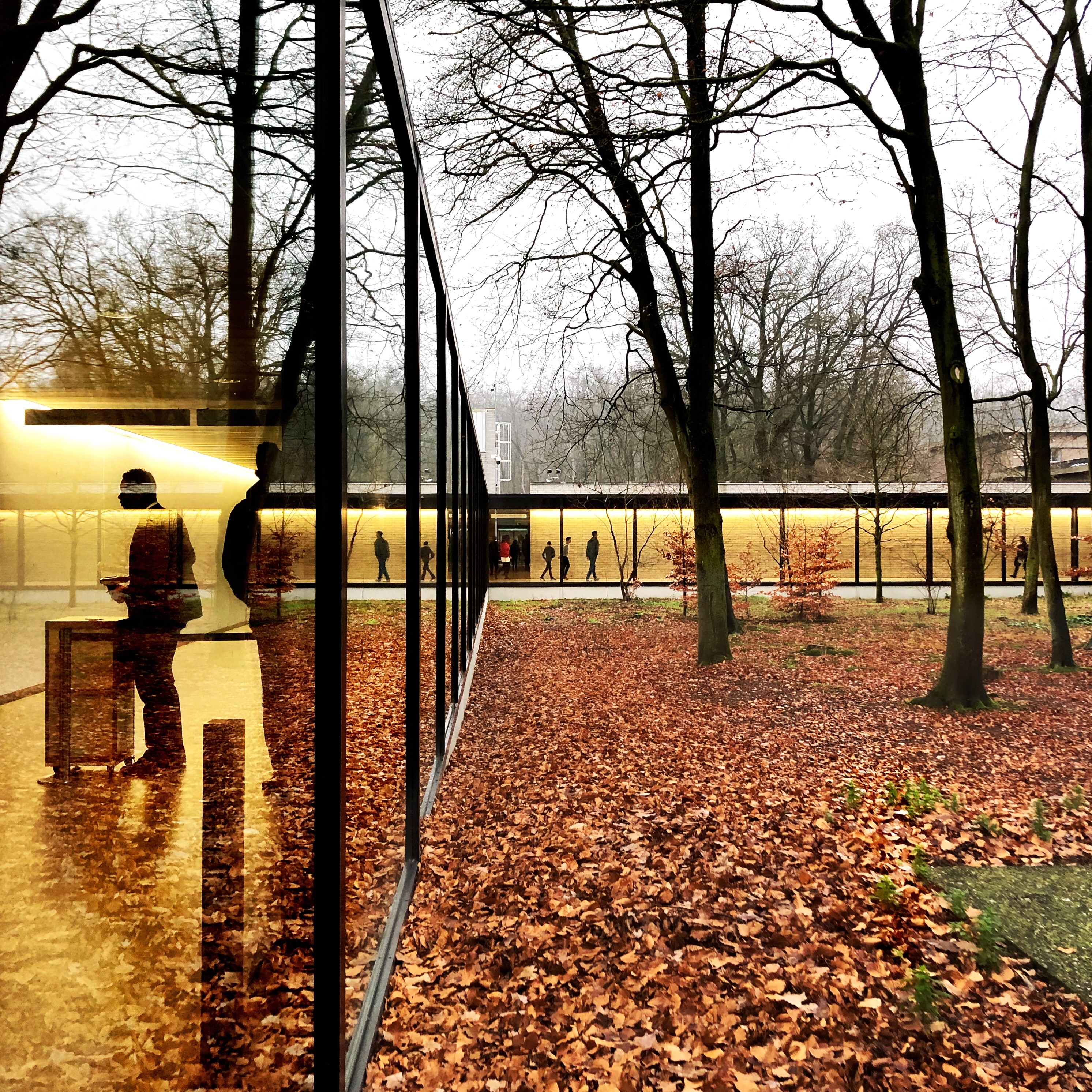
The forest setting makes the visit feel separate from the city routes.
Portrait of the Postman Joseph Roulin by Van Gogh
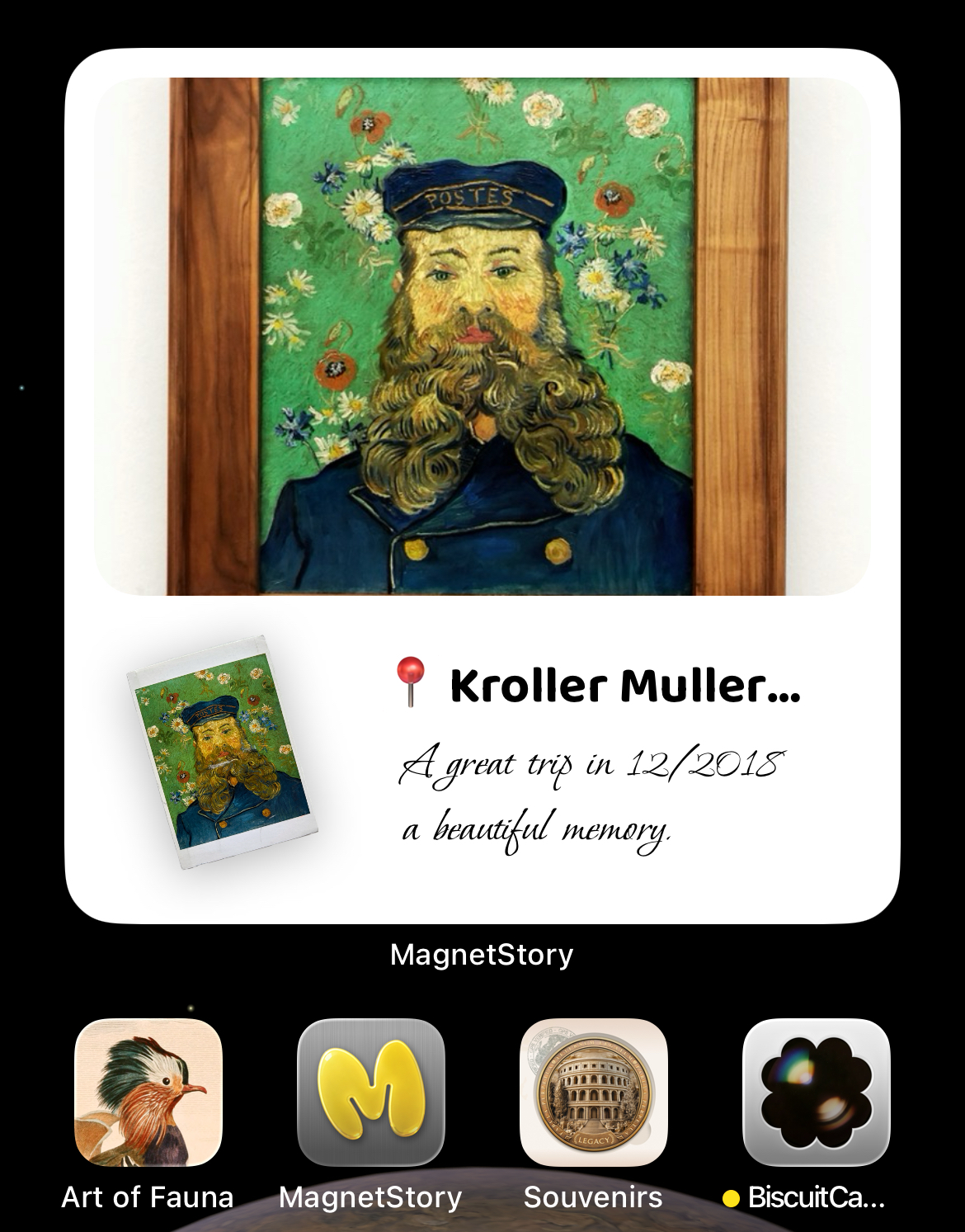
Van Gogh's Portrait of the Postman Joseph Roulin is the kind of artwork that fits MagnetStory naturally. A postcard of the work can become a physical anchor, while photos and notes explain why this portrait stayed with you.
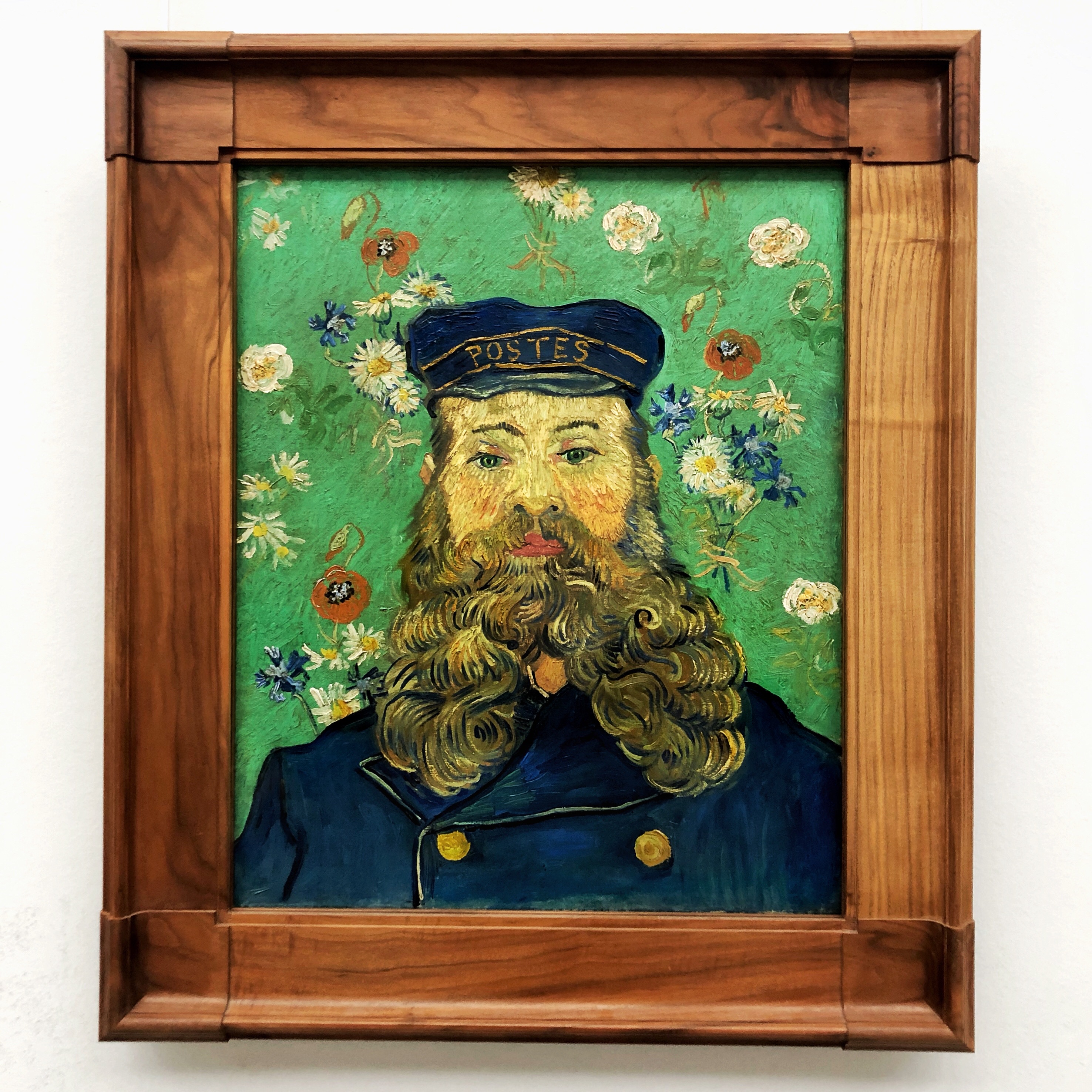
An artwork can become the center of a travel memory, especially when the postcard comes home with you.
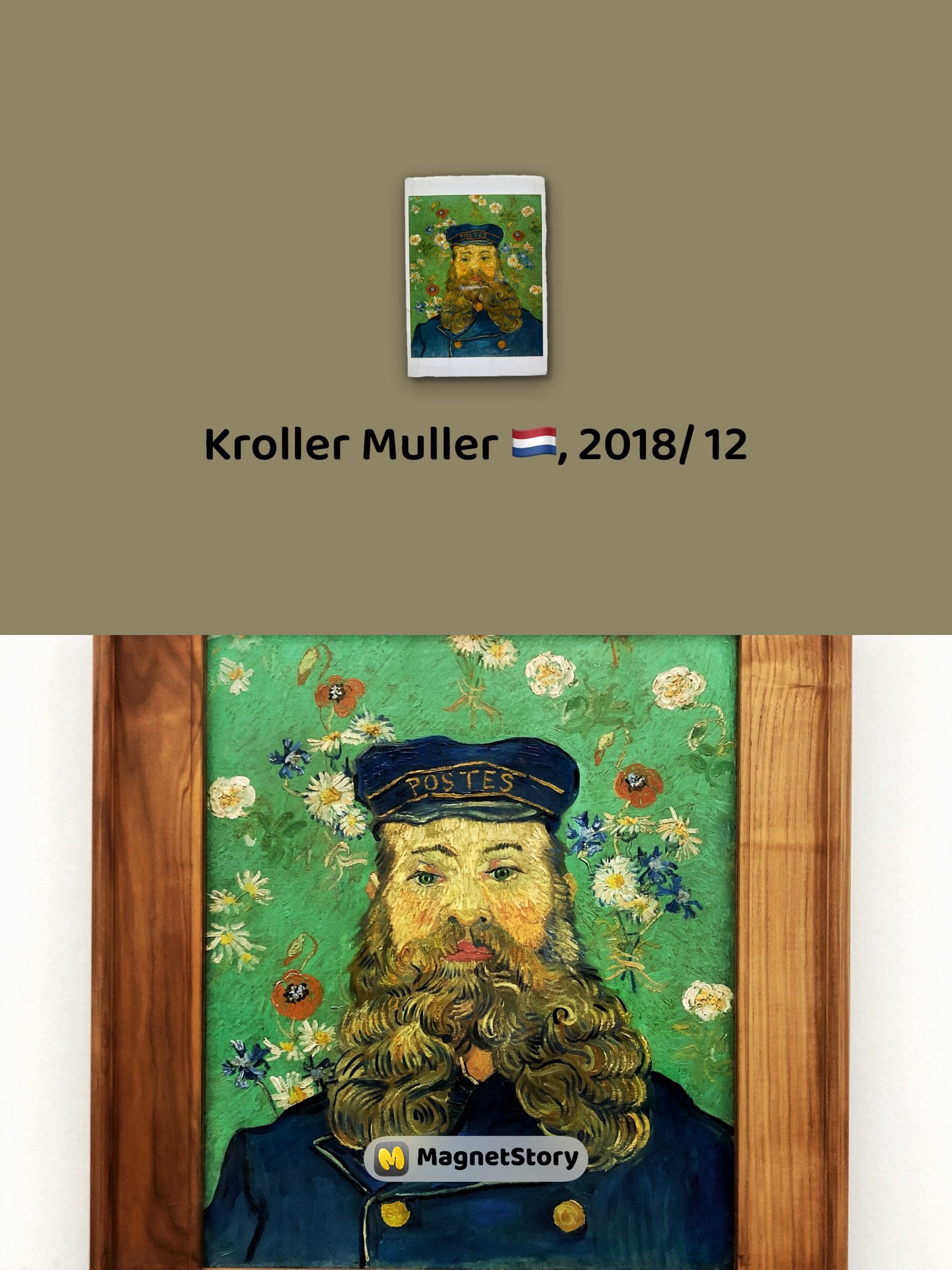
A second share style keeps the object visible while still linking back to the museum visit.
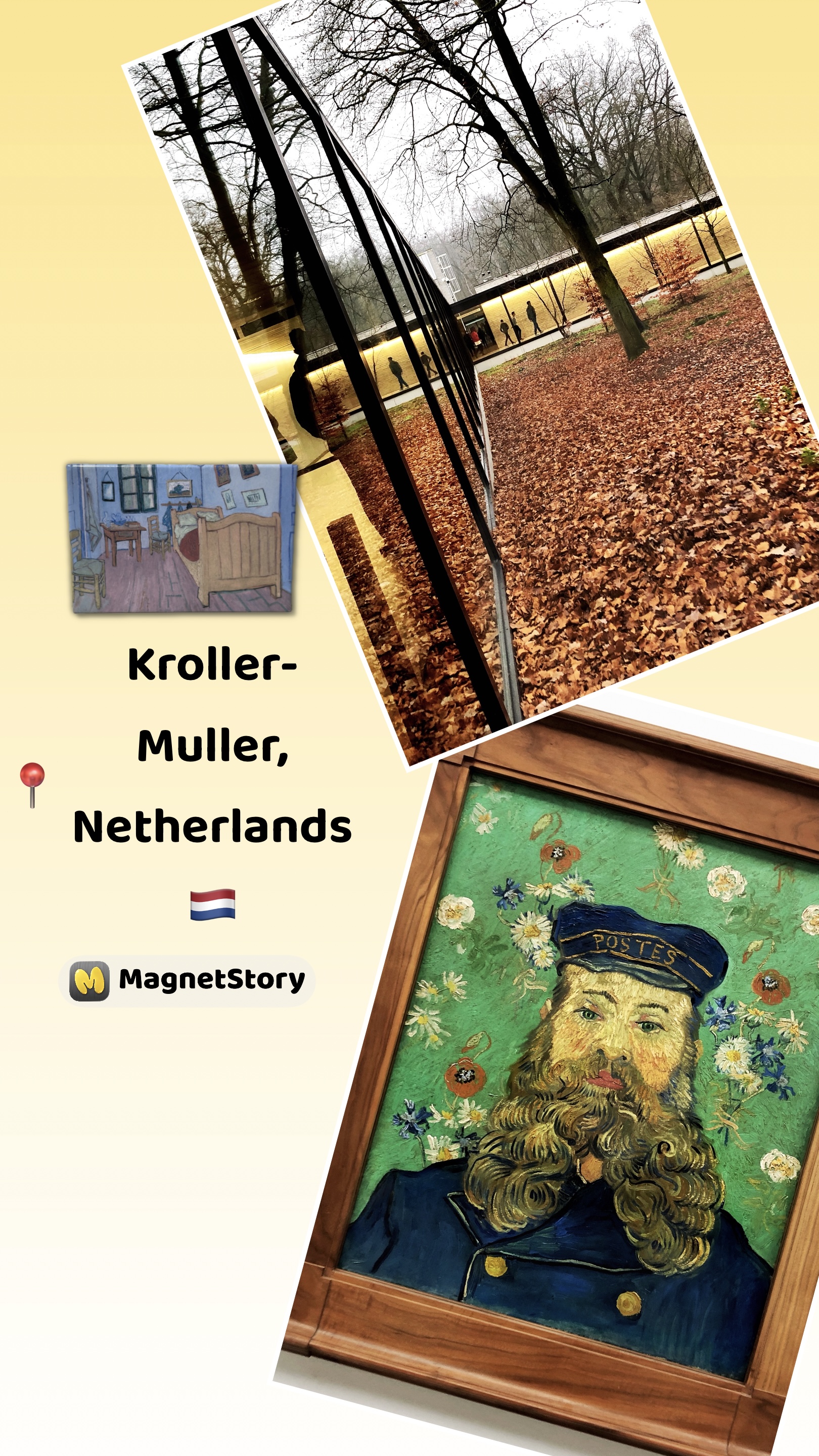
The postcard, location, and memory can become one MagnetStory share card.
De Kat / The Cat by Bart van der Leck
De Kat, or The Cat, by Bart van der Leck is a different kind of memory: flatter, sharper, and more about color and reduction. Placed near the Rietveld and De Stijl part of this route, it helps connect architecture, painting, and graphic form.
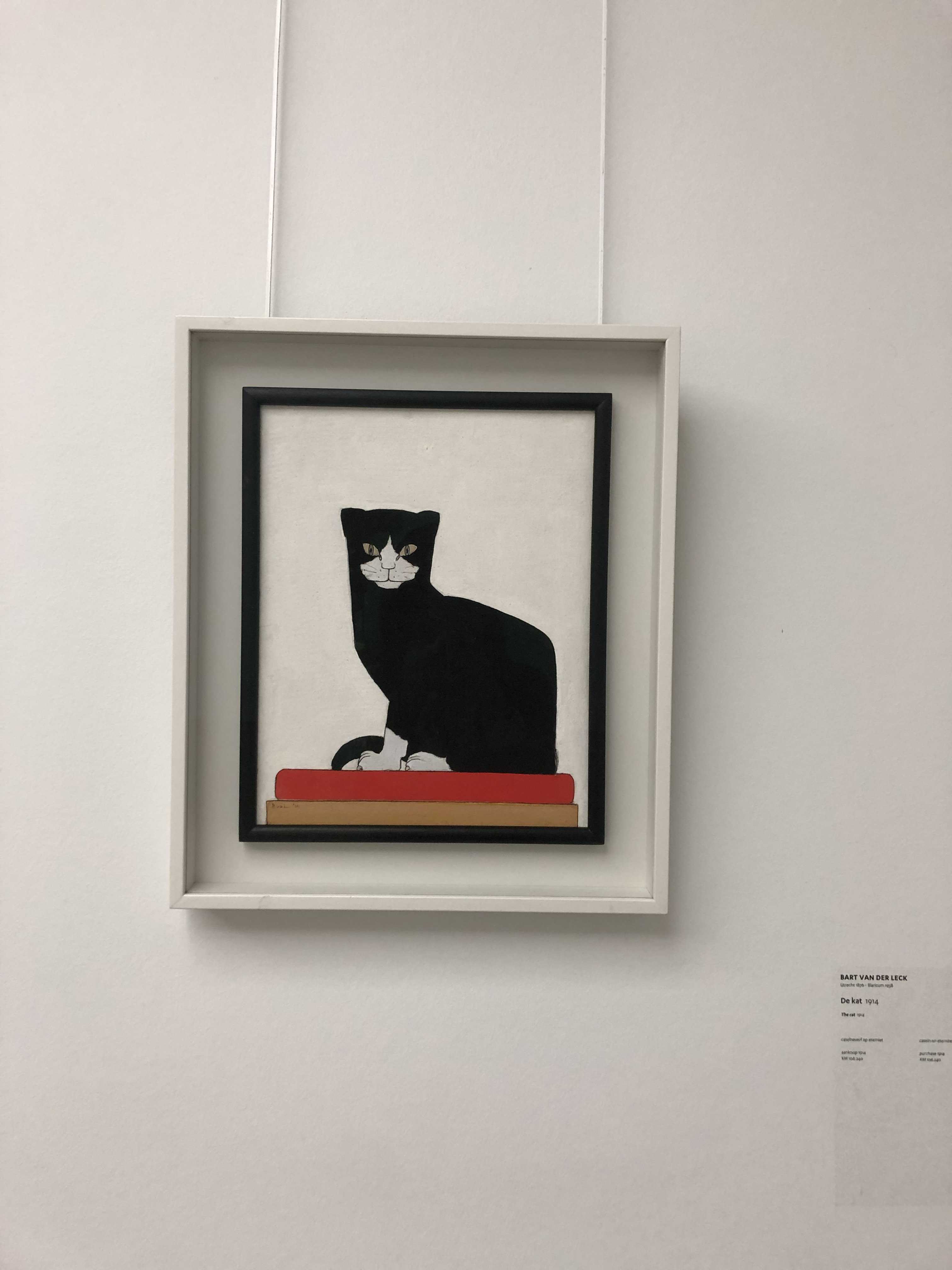
Sometimes the memory is not the place itself, but the shape and color you remember from it.
How I would save these Netherlands memories in MagnetStory
Object: museum postcard, ticket, printed guide, small souvenir, or a photo of the artwork card.
Place: The Hague, Utrecht, Otterlo, plus the exact museum, house, or artwork.
Photos: choose one place photo, one artwork or object photo, and one detail that explains the day.
Note: add the personal part: no indoor photos, high stairs, broken boots, forest buses, or why the painting stayed with you.
Quick notes for art and architecture keepsakes
- Best keepsake types: postcards, museum tickets, object labels, printed guides, maps, receipts, and small museum-shop items.
- Best memory style: one artwork or building per object, with a short note about why it mattered.
- Best travel habit: save the practical details too, because transport, weather, stairs, and photo rules often become part of the real memory.
Postman postcard memories on your iPhone
The Van Gogh postman postcard is exactly the kind of object MagnetStory is built for: small enough to keep, specific enough to remember, and meaningful enough to deserve more than a forgotten photo in the camera roll.
Get MagnetStory on the App Store
MagnetStory is made for people who want to keep the story behind travel souvenirs, museum postcards, architecture visits, tickets, and small personal objects.
 ← Back to Blog